


On any given Saturday during rugby season, Barker Field on Hilton Head Island comes alive with a scene that has repeated itself in one form or another for more than half a century. Players lace up their boots, families gather along the sidelines, children chase one another through the grass, and old friends reconnect.
Some have been part of the club for decades. Others are experiencing their first match. Together, they represent a tradition that has endured through extraordinary change.

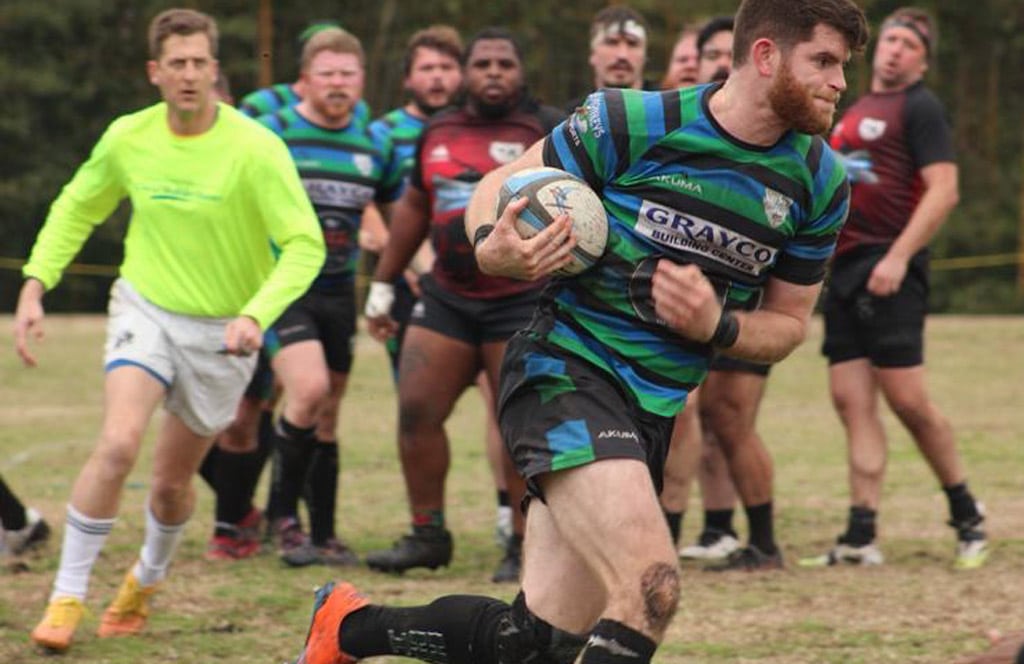
James “Cindy” Rogers, now the head coach, with a hard carry against the Athens Georgia Eagles in 2024.
Founded in 1974, the Hilton Head Rugby Club recently celebrated its 50th anniversary. When the club was established, Hilton Head Island was home to fewer than 6,000 permanent residents. Since then, the island has transformed into one of the country’s most recognized resort destinations, experiencing dramatic growth in population, business development, and tourism. Through it all, the rugby club has remained a constant.
For longtime member Tim Burke, the club’s longevity reflects something much larger than a game.

The 1982 team following a match at Barker Field
“It’s definitely a fraternity,” Burke said. “It is a worldwide fraternity that if anybody showed up on Hilton Head who played rugby and is looking to play rugby, we’ll help them find a job and we’ll find them a place to live and help them out when they get here.”
That spirit of belonging has carried the organization through five decades and multiple generations, creating friendships that have lasted a lifetime and establishing the club as one of Hilton Head’s most enduring athletic institutions.
The Hilton Head Rugby Club traces its roots to attorney Ed Hughes, who founded the organization in 1974 after relocating to the island. A former rugby player at Clemson University and in Columbia, Hughes recognized an opportunity to introduce the sport to a small but growing community.
Burke arrived on Hilton Head in 1983, and the existence of the rugby club played a significant role in his decision to move.

Current club president, Daniel Peck, with mascot, Snaps (son JB Peck) postmatch at Barker Field 2025
“Part of the reason for me moving here was that there was a rugby club,” he said. “I had been looking to relocate and saw that there was a club here.”
A lifelong rugby enthusiast, Burke had begun playing at St. Bonaventure University in New York before continuing with clubs in Boston and Rochester. By the time he arrived on Hilton Head, rugby had already become a defining part of his life.

Hilton Head Gators and Greenville Griffins compete in a scrum in their 2026 meeting
An Island in Its Infancy
When the Hilton Head Rugby Club was founded in 1974, the island looked vastly different from the thriving community residents know today. Much of the development that now defines Hilton Head had yet to be built, and many of the amenities that locals now take for granted simply did not exist.
Yet even in those early years, the island attracted people from diverse backgrounds who were eager to build something meaningful. Among them were transplants from the Northeast, former college athletes, hospitality workers, and expatriates from rugby-playing nations such as England and South Africa.
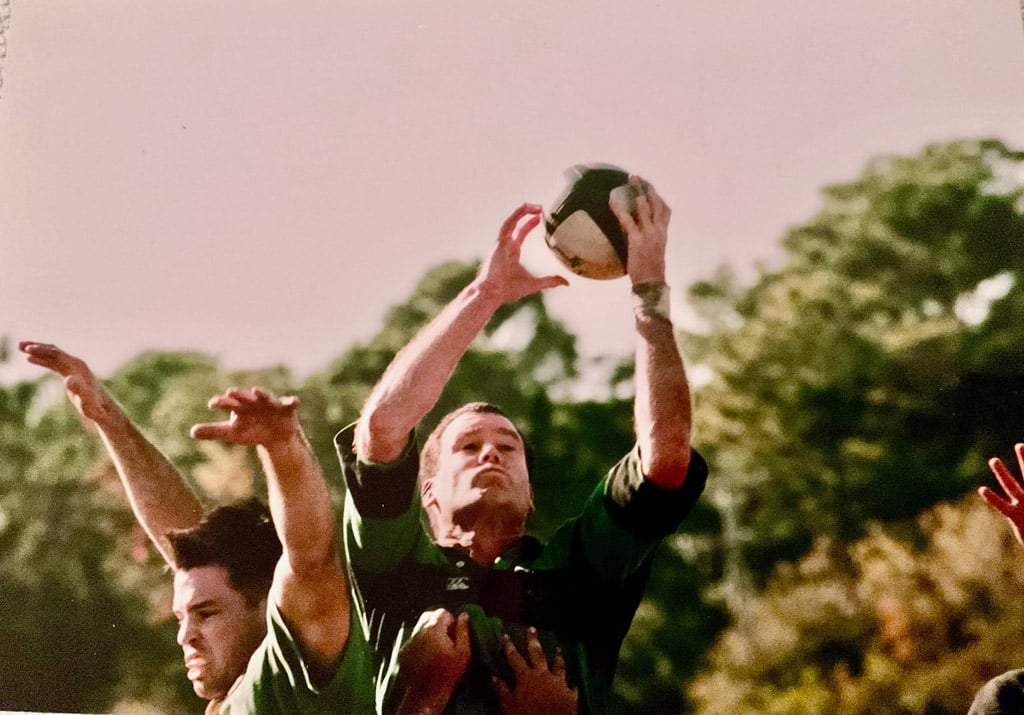
Hall of Famer, Tim Burke, wins a lineout 1992
According to Alexander MacDonald, the club quickly became a gathering place for people searching for connection in a rapidly developing community.
“There weren’t many people here at the time,” MacDonald said. “But a lot of them were from other areas of the country where rugby was more popular, as well as a couple of expats from England and South Africa. It was a good way to build a community in a budding community.”
Long before social media groups and networking events existed, the rugby club offered something simpler but equally powerful: a place where newcomers could instantly find friends, purpose, and belonging.
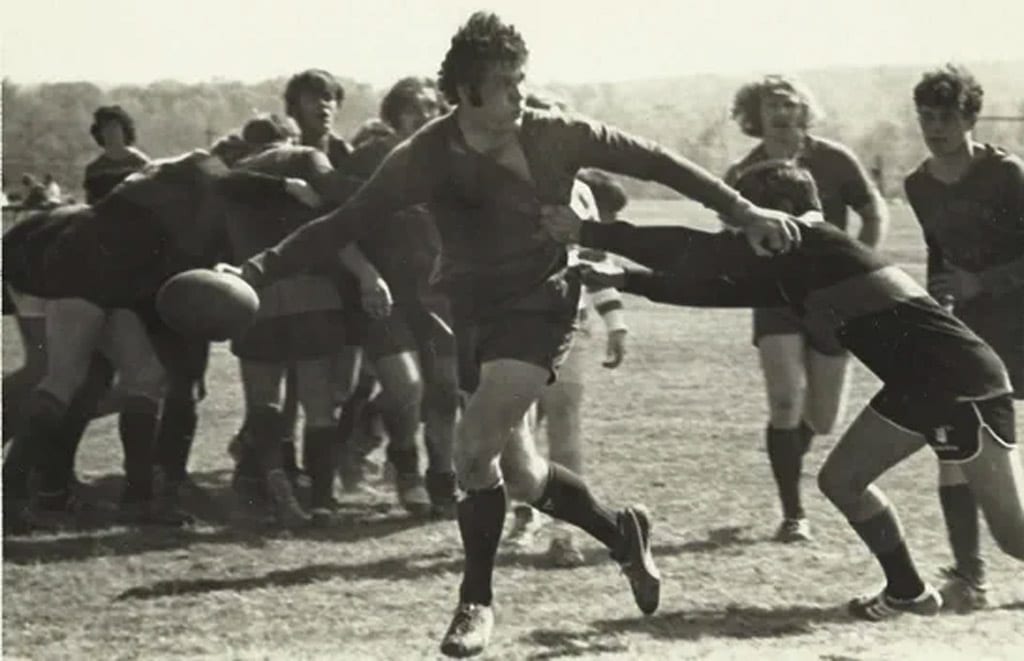
Hilton Head Rugby’s founder and first captain, Ed Hughes, breaks a tackle in 1974 during the club’s first year
During the club’s first decade and a half, members balanced competition with camaraderie. “From 1974 to 1990, the club was very social, moderately competitive,” Burke said. “We would play rugby on Saturdays, then go down to the beach and play volleyball and have a keg of beer on the beach just about every weekend.”
Like many rugby clubs around the world, the Hilton Head organization served as both an athletic team and a social network. For many members, it became an extended family.

You’ll find the club regularly volunteering. This photo is from the club’s annual beach bike bar crawl for breast cancer, circa 2017
A New Era of Competition
The club’s trajectory changed significantly in 1990 with the arrival of New Zealander Bob Weir.
In New Zealand, rugby is more than a pastime; it is woven into the nation’s identity. When Weir joined the Hilton Head club, he challenged members to decide what they wanted the organization to become.
“He asked us if we wanted to continue to be a social club or if we wanted to get better and be competitive,” Burke said.
The answer was unanimous.
From that point forward, the club embraced a new level of commitment and performance. “We all agreed,” Burke said. “From 1990 on, we were extremely competitive.”
The results were remarkable. The Hilton Head Rugby Club began winning state tournaments regularly and captured multiple titles at Savannah’s renowned St. Patrick’s Day Rugby Tournament, one of the largest and most respected rugby events in the Southeast.
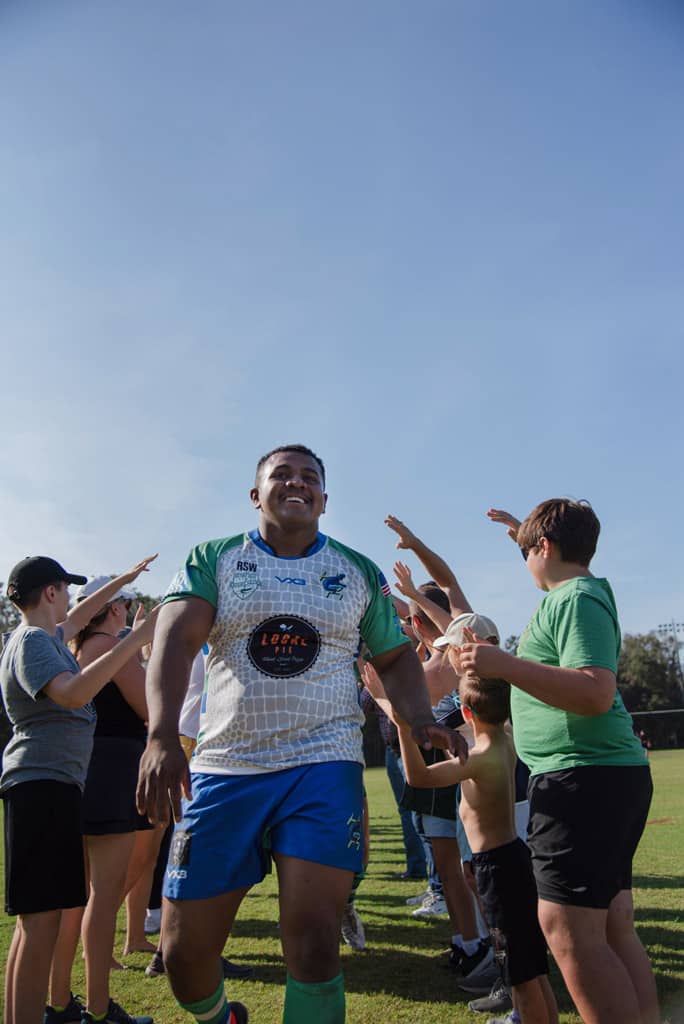
Jowan Tejada, stationed at the Marine Corps Air Station in Beaufort, celebrating with fans following a victory in fall of 2024
Despite representing a relatively small island community, Hilton Head routinely competed against – and often defeated – teams from much larger metropolitan areas including Atlanta, Jacksonville, Orlando, and Miami.
The club’s success became a source of pride not only for its members but also for the community it represented.
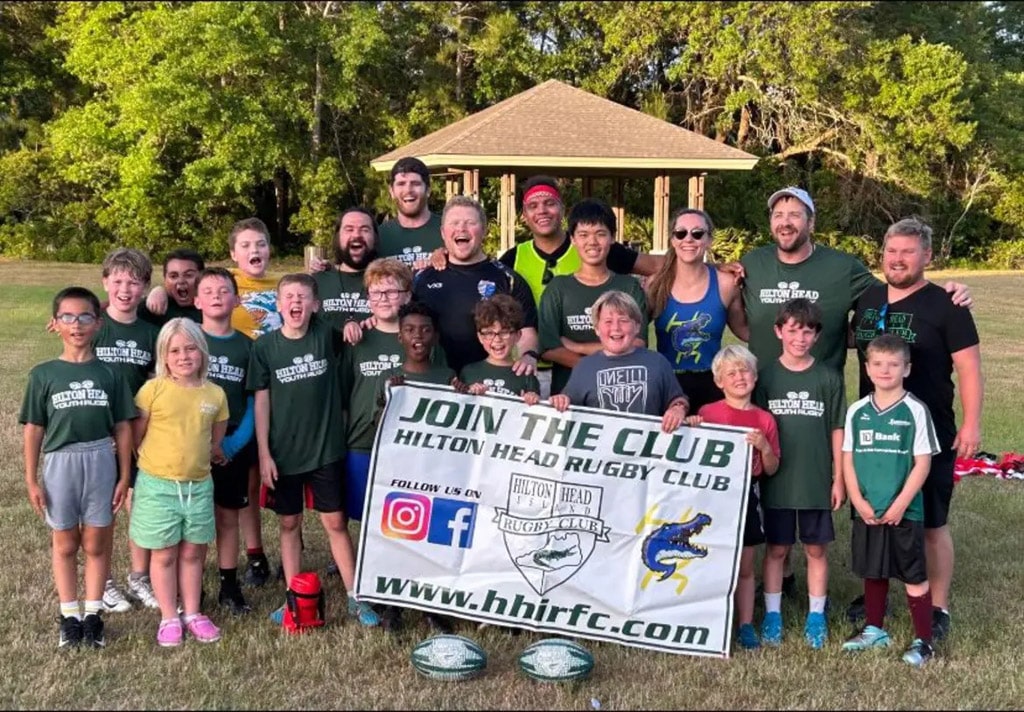
The club partnered with Island Rec Center to create a youth rugby program in 2024.
The Match They Still Talk About
Every long-standing organization has defining moments. For Hilton Head Rugby Club, one of the most memorable occurred in 1996.
Burke describes it as the highlight of the club’s history.
That year, Hilton Head advanced to the Eastern Rugby Union finals, competing against powerhouse clubs from New York City, Washington, DC, and Atlanta.
The contrast could not have been greater.
“We went to this tournament with 16 players,” Burke said. “The other teams had 30 and 40 guys, came on buses with matching uniforms, matching kits and everything, and we pulled up in a couple of station wagons.”
Among the competitors was Old Blue Rugby Club from New York City, one of the nation’s perennial rugby powers.
Against all expectations, Hilton Head held the heavily favored team scoreless through the first half.
“We were 0-0 at halftime,” Burke said.
Eventually, the depth of Old Blue’s roster proved decisive. Fresh substitutions entered the match while Hilton Head had only one reserve available.
The underdogs ultimately fell short, but not before earning the admiration of players and spectators alike.
“All the fans were cheering for us because we were the underdogs by a long shot,” Burke recalled.
Although Hilton Head lost, the performance cemented the club’s reputation as a serious competitor.
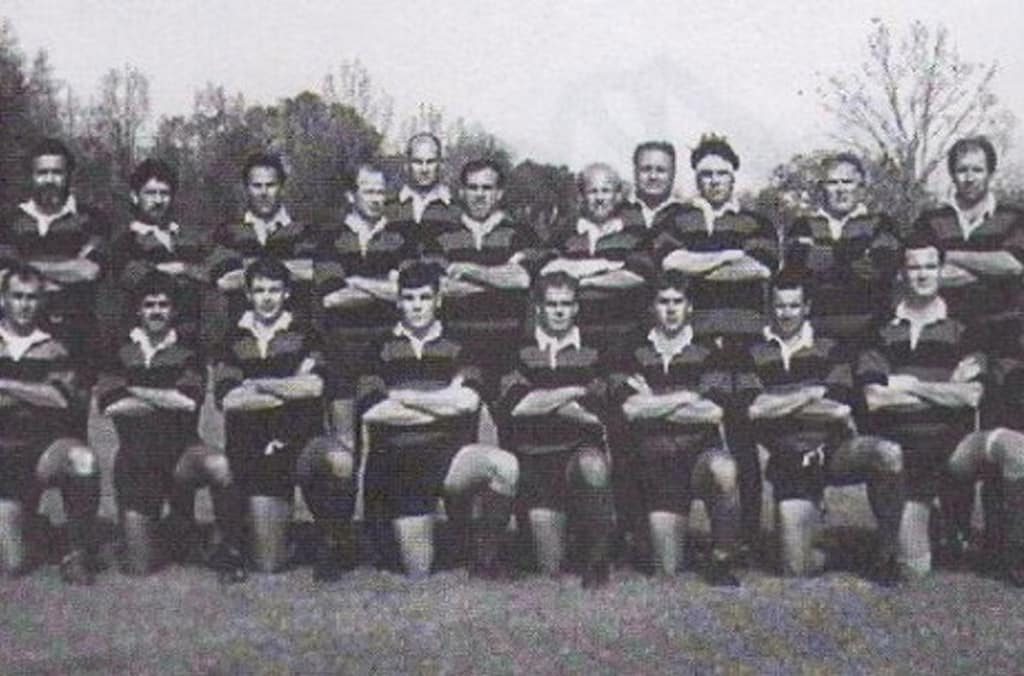
The 1992 team at the Eastern Rugby Union championship in Baton Rouge, Louisiana
More Than a Game
For many Americans, rugby remains something of a mystery. At first glance, the game appears intimidating. Players tackle without helmets or shoulder pads while advancing an oval-shaped ball across a field roughly the size of a soccer pitch. MacDonald often describes it as “if football and soccer had a baby.”
Played with 15 athletes on each side, the sport combines the physicality of football with the continuous movement and open-field strategy of soccer. Players advance the ball by running forward while passing backward, working together to create scoring opportunities known as “tries.”
Both Burke and MacDonald are quick to point out that rugby’s physicality is balanced by a culture of respect, sportsmanship, and teamwork. Success requires speed, strength, endurance, strategy, communication, and trust. Every position serves a purpose, creating opportunities for athletes of all shapes, sizes, and backgrounds.
“We have guys called ‘props,’” MacDonald explained. “They’re anywhere from 260 to 300 pounds. Then we have a guy who was a high school cross-country runner who can’t weigh more than 160 pounds. There’s a job for everybody.”
That inclusiveness remains one of rugby’s greatest strengths and one of the reasons the sport continues to attract such a diverse group of players. The current roster includes former college football players, lifelong rugby veterans, young adults searching for community, and men who had not participated in organized sports for years before discovering the club.
“We have guys of all ages, all background stories,” MacDonald said. “It’s pretty cool.”
The Brotherhood of Rugby
Ask almost anyone involved with rugby what keeps them coming back, and the answer rarely begins with winning. Instead, they talk about relationships. That theme surfaced repeatedly during conversations with both Burke and MacDonald.
For Burke, the club’s appeal extends far beyond competition. “It’s a fraternity,” he said. “I could go over to Scotland and knock on a door and say I’m looking to play rugby and they’ll look after you.”
Over the years, that fraternity has brought together an extraordinarily diverse cross-section of the Hilton Head community. Burke noted that the club’s roster has included food-and-beverage professionals, construction workers, doctors, attorneys, architects, and even a potter. Service members from Marine Corps Recruit Depot Parris Island and Marine Corps Air Station Beaufort have also worn the club’s colors, alongside players from traditional rugby strongholds such as England, New Zealand, and South Africa.
The club’s reach has extended into civic leadership as well. Former Bluffton Mayor George Heyward and former Hilton Head Island Mayor Tom Peeples both spent time on the rugby pitch.
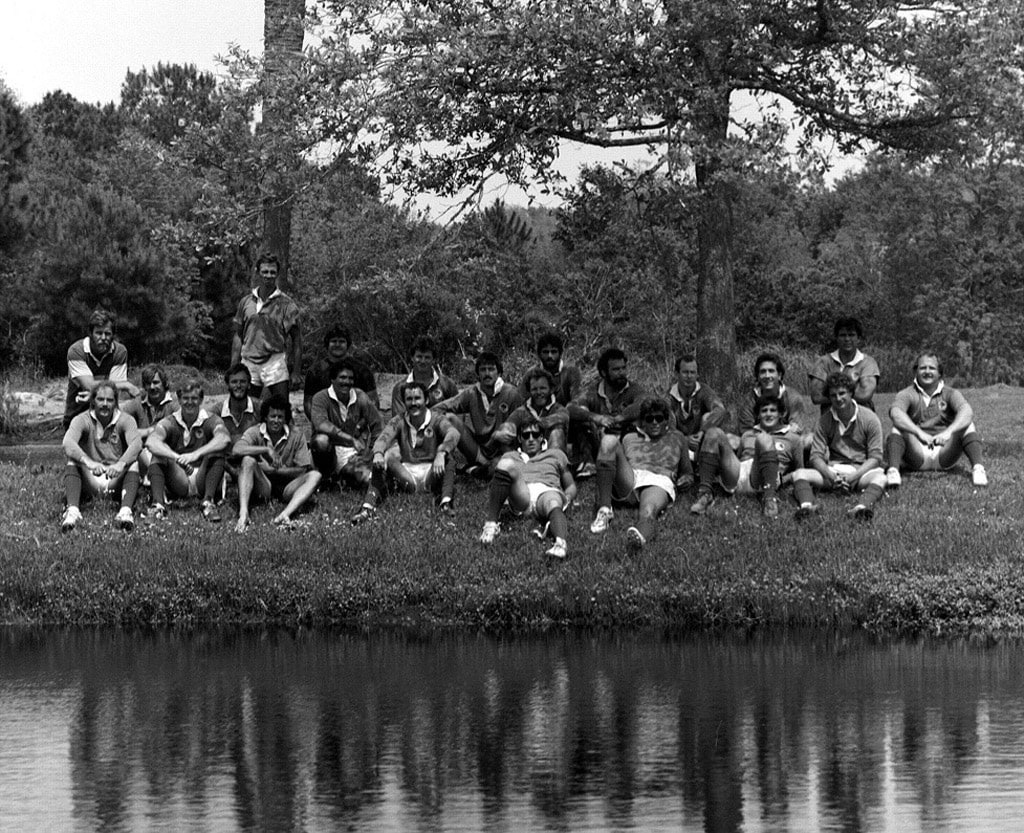
The 1982 team following a match at Barker Field
“Hilton Head Rugby Club has always had a great representation from the community,” Burke said. “We’ve had all kinds of people come through the club over the years.”
MacDonald sees the same dynamic at work on Hilton Head today. “I just want to keep emphasizing the word ‘community,’” he said.
After spending years competing at elite levels around the world, MacDonald returned home and discovered that the local rugby club had gone dormant. Looking for connection, he began reaching out to former players and posting invitations on social media.
The first practice attracted just three people. Then more arrived. And then more.
“When I moved back here, I didn’t really have that community that I was looking for,” he said. “So, I sent a few texts and posted on Facebook to ask if anyone wanted to come try rugby with me; I had three dudes show up. Then the next week more, and the next week more.”
What started as a small gathering has grown into a thriving organization with roughly 25 active players and a larger network of supporters and former members. A rugby team emerged and with it, a revival of a tradition that had connected island residents for decades.
One current player had spent years away from organized sports while raising a family. Another was a former college football player looking for a new competitive outlet after graduation. Others had never played rugby at all. “Most of them end up staying,” MacDonald said.
The steady growth affirmed what generations of club members had already discovered: People weren’t simply looking for a sport. They were looking for community.
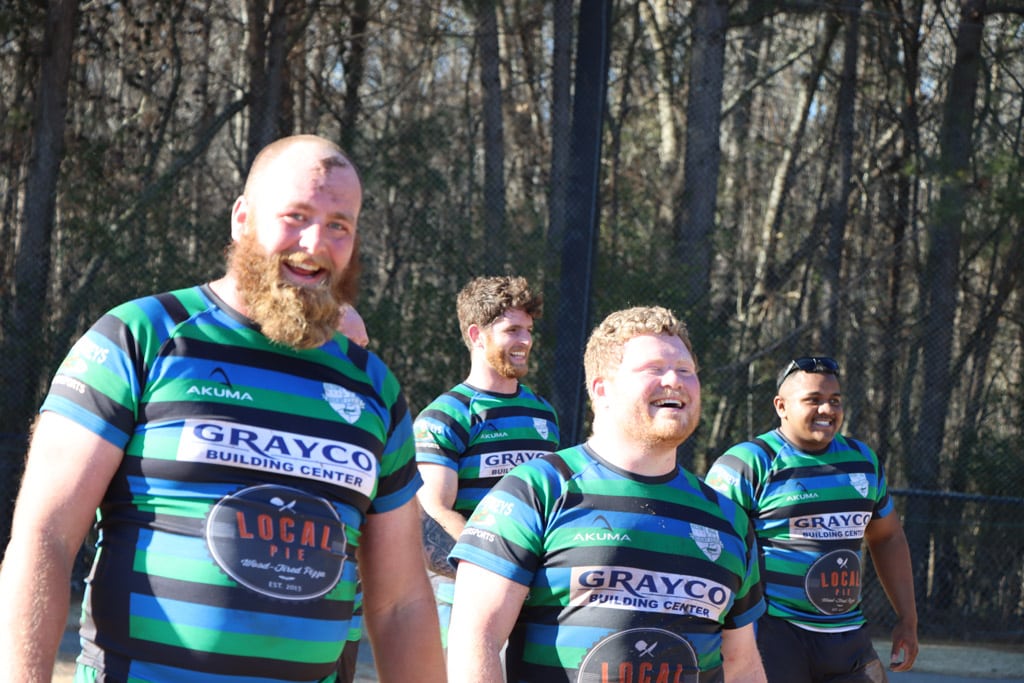
Jay Steir, Alex MacDonald, Zachariah Cushman, and Jowan Tejada celebrating a win over the Athens Eagles in 2024.
Passing the Torch
Perhaps no relationship illustrates the club’s multigenerational impact better than that of Burke and MacDonald. The two are uncle and nephew.
Long before MacDonald became an All-American rugby player or captain of the Hilton Head Rugby Club, he was a young boy watching his uncle compete. Burke introduced him to the sport.
Like many club members, Burke watched with pride as MacDonald’s rugby journey carried him far beyond Hilton Head. After earning All-American honors in college, MacDonald went on to play in Ireland before competing professionally in New York and Atlanta.
For Burke and many of the club’s longtime members, seeing one of their own reach the professional ranks was especially meaningful.
“I’m not sure you can grasp how special it was to all of us to see Alex play in Ireland, then play professionally in New York and Atlanta,” Burke said. “It’s every kid’s dream to play professionally in any sport they are playing, but to make it is surreal.”
Today, one of MacDonald’s professional jerseys from New York hangs from the ceiling at Reilley’s Grill & Bar, displayed alongside memorabilia honoring some of the biggest names in sports.
For the Hilton Head rugby community, it serves as a reminder that a small island club can produce extraordinary stories.
That continuity has become one of Hilton Head Rugby’s greatest strengths. Players come and go. Leadership changes. Generations advance. Yet the culture remains.
Burke still gathers regularly with teammates he met decades ago. MacDonald hopes to do the same someday.
“I can’t wait to be 60 years old on the sideline of the Hilton Head rugby game,” he said.
Family, Friendship, and the Future
The image many people have of rugby often focuses on collisions and competition. While those elements certainly exist, members say the reality is much broader. Today’s club emphasizes family involvement and community engagement. Spouses, children, and friends routinely attend matches. Young families gather along the sidelines. Players often remain involved long after their playing days end.
Burke said maintaining that atmosphere has been intentional. “We’ve tried to keep it a family atmosphere,” he said.
The tradition continues after matches as well. One of rugby’s most cherished customs involves hosting opponents after games. Following home matches, players from both teams gather for food, conversation, and fellowship.
“We feed the away team,” MacDonald said. “We all go to Local Legend. We put on a buffet, have some food, have some beers, sing some songs, do some post-match awards.”
The ritual reflects a defining characteristic of rugby culture: fierce competition on the field, mutual respect afterward.
“It’s an aggressive sport,” MacDonald said. “But it’s also just a game.”
That spirit has helped create friendships that extend far beyond Hilton Head. Burke and his wife have attended multiple Rugby World Cup tournaments and regularly travel internationally to watch matches. Former players remain connected decades after hanging up their boots. Current players know that wherever life takes them, they can often find a rugby club and an instant network of friends.
Fifty years after its founding, the Hilton Head Rugby Club stands as a remarkable example of organizational endurance.
Its history mirrors the history of Hilton Head itself – from a small and emerging island community to a nationally recognized destination. Through periods of growth, change, challenge, and success, the club has continued to provide something many people are searching for: connection.
State championships, international tours, and national-level competition are impressive accomplishments. Yet members would likely argue that the club’s greatest success has been creating lifelong friendships, strengthening families, and giving generations of residents a place to belong.
For Burke, that legacy is clear.
For MacDonald, it is still being written.
And for the Hilton Head Rugby Club, the next chapter appears every bit as promising as the first 50 years. For more information, visit hiltonheadrugby.com.