

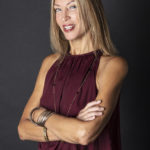
On Hilton Head Island, where sunrises glitter over the Atlantic and the beauty of the Lowcountry is a feast for the senses, the threat of losing one’s sight is especially poignant. For Carolyn Strauss, a longtime island resident, that threat is deeply personal. Her daughter Abby, now 50, has lived her life with Usher syndrome, a rare genetic disorder that combines profound hearing loss with progressive vision loss caused by retinitis pigmentosa.
That experience has not only shaped Strauss’ life but has inspired her to take action. With the support of Chelsea Warr, community manager for the Atlantic Coast region of the Foundation Fighting Blindness, Strauss is working to establish a local chapter of the national nonprofit organization here in the Lowcountry, an effort designed to bring much-needed education, resources, and community to those facing retinal degenerative diseases.

Abby Strauss
“Vision loss, like hearing loss, creates a sense of isolation,” Strauss said. “And yet so many in our community who are struggling with visual impairments don’t even know these resources exist.”
Strauss’ advocacy began decades ago, driven by Abby’s diagnosis. At just 13 months old, Abby was declared profoundly deaf. At the time, Strauss and her husband, Howard, were living in Naples, Italy, where Howard was stationed with the Navy. Strauss recalls falling ill during pregnancy and receiving injections of Compazine, a medication later believed to have caused Abby’s deafness.

The Strauss Family
Soon after the diagnosis, the family returned to the United States and settled in Danville, Kentucky, home to the Kentucky School for the Deaf. Determined not to send Abby to a residential program far from home at such a young age, Strauss enrolled her as a day student. The early years were filled with dedication, determination, and the beginnings of a journey that would grow even more complex.
When Abby was about 12 years old, she began reporting trouble with her vision. A visit to an ophthalmologist led to a diagnosis of retinitis pigmentosa, a degenerative eye disease. After further evaluation at the Lions Eye Bank in Louisville, Abby was confirmed to have Usher syndrome.
“Usher’s is a combination of deafness and retinitis pigmentosa,” Strauss said. “It means that over time, she’s lost her vision as well as her hearing. Today, she has about a 10-degree radius of vision left – and that’s only in bright light.”

Sarah Fanjul, Carolyn Strauss, Karen Elrod and Ellen Johnston (not pictured), meet about the upcoming event on October 22.
Through it all, the family persevered. Strauss learned firsthand how critical early intervention and support were, not just from doctors, but from organizations capable of making practical adaptations. She recalls how Abby’s home was outfitted with special systems, such as doorbells that trigger flashing lights instead of sounds.
“That kind of help makes a world of difference,” Strauss said. “But unless you’re connected to the right people, you may never know it’s available.”
That’s where the Foundation Fighting Blindness (FFB) comes in. Established more than 50 years ago, the Foundation has raised more than $954 million to support research for treatments and cures for retinal diseases like retinitis pigmentosa, macular degeneration, and Usher syndrome. With more than 45 chapters nationwide, FFB’s mission extends beyond the lab, striving to connect people to resources and to one another.
“The Foundation is the world’s leading organization committed to finding treatments and cures for the entire spectrum of blinding retinal diseases,” Warr said. As the Atlantic Coast community manager, Warr oversees outreach and support across several states, including South Carolina.
Currently, the only active FFB chapter in the state is the state chapter. For people in Hilton Head, Bluffton, or Beaufort, that means traveling several hours to attend a VisionWalk fundraiser or a local seminar. “If a person is visually impaired, how are they supposed to get to Myrtle Beach?” Strauss said. “That kind of travel isn’t realistic for most people.”
Warr agrees. “The South Carolina Chapter covers the entire state, but we’re looking to gauge interest and establish a community right here on Hilton Head,” she said. “Our hope is that with enough local involvement, we can build a fully functioning community over time.”
Community Meeting for the visually impaired: Join us to discuss transportation options, building friendships and a sense of belonging to end the feelings of isolation. Let’s Get Going! When: Tuesday, October 21 at 10am Where: the campus at 10 Park Lane, HHI
A Community Pillar
The Foundation’s chapter model focuses on three key areas: Education, resources, and revenue.
Education involves sharing the latest developments in vision research, including clinical trials, breakthroughs in gene therapy, and new treatment options.
Resources help people access occupational therapists, vision specialists, adaptive technology, and home modifications to enhance independence.
Revenue supports ongoing research through events like VisionWalks, DIY fundraisers, and individual donor support.
These chapters also serve as emotional lifelines, offering community support to those navigating the challenges of vision loss.
Strauss sees an urgent need for this support in the Lowcountry.
“I have several friends here who have macular degeneration and other visual impairments,” she said. “Almost none of them were aware of the Foundation. That means they weren’t aware of the research, the seminars, or the help they could be getting.”
The chapter Strauss and Warr are working to build would serve as a hub for those resources. Strauss has volunteered to serve as the new chapter’s Resource Chair, should it come to fruition. In that role, she would help identify and connect individuals to local specialists and service providers, including occupational therapists like Stacy Gormley, who recently spoke at the group’s kickoff event. Gormley helps visually impaired individuals adapt their homes and technology, such as modifying font sizes on computers or installing signal lights in place of auditory alerts.
Building a chapter isn’t a small task. It requires volunteers, leadership, and – perhaps most critically – a sense of community. Strauss and Warr are planning initial events to spread the word and assess interest. The upcoming gatherings will feature speakers, community outreach, and information on how to get involved.
“Our vision is to recruit and retain a high-performing, well-structured, community-based grassroots chapter leadership and membership,” Warr said. “And that starts with people like Carolyn, people who understand what’s at stake and are passionate about making a difference.”
For Strauss, this effort is not only about Abby. It’s about every person in the Lowcountry who has been made to feel invisible because of a condition that affects how they experience the world.
“Abby has mentioned that being deaf blind can be isolating because, while the deaf community is a minority, deaf blindness is a sub-minority, and people don’t often know what to do with this group. That is heartbreaking,” Strauss said. “But if we can build a community here – one that’s informed, compassionate, and connected – we can help people like Abby be seen.”
How to Get Involved
Anyone interested in learning more or supporting the effort to build a Hilton Head chapter of the Foundation Fighting Blindness can visit the organization’s website at fightingblindness.org. There, you can find information about upcoming events, local initiatives, and how to volunteer or donate.
“With more than 50 years of experience, the Foundation has shown what’s possible when people come together,” Strauss said. “It’s time for Hilton Head to join that mission.”
In a region where natural beauty is celebrated every day, the fight to preserve sight takes on added meaning. Thanks to advocates like Strauss and supporters like Warr, the future for the visually impaired in the Lowcountry is starting to look a little brighter.