


You might remember from our February issue, where I was featured in the 5 Reasons to Celebrate column, that cooking for friends and family is one of my “love languages.” It’s how I show up. It’s how I gather people in. And it’s how I nourish not just bodies, but connection.
Now, I can stir up a pretty tasty mess of greens and cornbread and simmer a mean pot of Louisiana gumbo without thinking twice. But baking? That has always felt like an entirely different language – one I never quite learned to speak.
I am, at my core, a creative. So, it has always resonated with me when people say, “Cooking is an art form, but baking is a science.” Art allows for instinct, improvisation, a dash of this and a little more of that. Science, on the other hand, requires precision, patience, and a willingness to follow rules.
A scientist, I am not.
And yet … something has shifted, y’all.
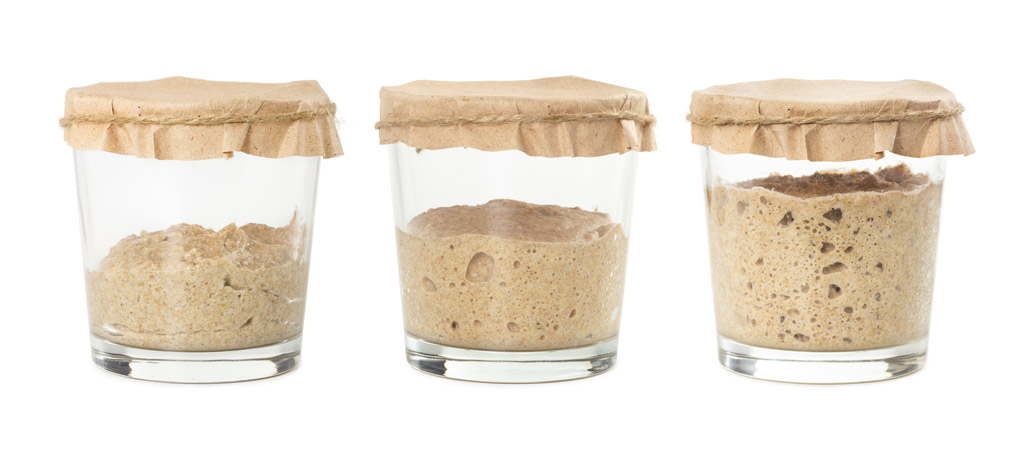
It started, as many good things do, in an unexpected moment in an unexpected place. Victoria, one of the massage therapists at Jiva Yoga Center, where I teach, walked into the studio with a sourdough starter in hand and casually offered it to me. She explained how to “feed” it, texted me a few videos, and spoke about the process with such ease that, before I could overthink it, I found myself completely intrigued.
By the time I left the studio, I was already imagining my first loaf.
That same day, I went home, opened my laptop, and promptly ordered everything I thought I might need: a bread kit, a cast iron Dutch oven, loaf pans, liners – the works. If I was going to try this, I was going all in.
Somewhere between clicking “Add to Cart” and refreshing my tracking number, I reached out to Amy, my dear friend from high school who bakes multiple sandwich loaves each week for her four sons and their families. She has since become my unofficial sourdough mentor, patiently answering my questions, encouraging my efforts, and generously sharing her growing collection of “discard” recipes (which, I’ve learned, is a whole world unto itself).
And just like that, I found myself standing in my kitchen, staring at a jar of bubbling starter, wondering how in the world I had gotten here.
Following my early success – and, admittedly, my growing enthusiasm for this curious blend of art and science – I pitched the idea of writing about it to Maggie Washo, my editor and publisher of C2.
So here we are.
Why sourdough? Why do people love it so much? Why is it considered better for us? And, perhaps most intriguing of all, why is everyone suddenly baking it?
An Ancient Practice Finds New Life
Sourdough is far from new. In fact, it is one of the oldest forms of bread in human history, dating back thousands of years to ancient civilizations that relied on wild yeast and naturally occurring bacteria to bring their bread to life.
What we now call a “starter” is, at its simplest, just flour and water but. given time, it becomes something much more dynamic. It bubbles. It grows. It responds to its environment. It demands consistency and attention.
It is, in many ways, alive.
In a culture built on speed and convenience, sourdough offers something radically different: A return to process. A return to patience. A return to participation.
For many, the sourdough resurgence began during the stillness of 2020. When life slowed down, kitchens became classrooms, and people rediscovered the quiet satisfaction of making something from scratch.
Flour flew off the shelves. Social media filled with images of rustic loaves and bubbling starters. Bread baking became both a creative outlet and a grounding ritual.
What’s fascinating is that the trend didn’t fade when life picked back up. Because sourdough isn’t just about bread; it’s about rhythm.
Once you step into that rhythm – the feeding, the folding, the waiting – you begin to understand that this isn’t just a hobby. It’s a practice. And, like many meaningful practices, it has a way of staying with you.
From Intimidation to Intuition
Let me be clear: I did not suddenly become a scientist overnight. But I have gained a new appreciation for what’s happening behind the scenes.
Sourdough relies on fermentation, a natural process where wild yeast and beneficial bacteria break down the sugars in flour. This not only allows the dough to rise but also creates its distinct tangy flavor and airy texture.
More importantly, this slow fermentation process can make sourdough easier to digest. It begins breaking down gluten and phytic acid, which can interfere with nutrient absorption. The result is bread that many people find gentler on the body and more nutritionally accessible.
So, while I may still lean toward the artistic side of the kitchen, I can now hold my own in a conversation about hydration levels and fermentation timelines, at least well enough to sound like I know what I’m doing.
My first loaf? Let’s just say it was a learning experience.
There were moments of uncertainty – dough that felt too sticky, timing that felt unclear, and more than a few texts that read something like “Is this normal?”
But somewhere along the way, something shifted. What once felt intimidating began to feel intuitive.
There is a rhythm to sourdough: Feed the starter, mix the dough, let it rest, stretch and fold, rest again, shape, proof, bake.
It’s a process that cannot be rushed, only respected.
And in that way, it mirrors so much of what I teach in yoga. You show up. You stay present. You trust the unfolding.
Transformation happens not because you force it, but because you allow it.
The Unexpected Gift of Community
Perhaps one of the most surprising parts of this journey has been the sense of connection it creates. Sourdough bakers are, without question, some of the most generous people I’ve encountered. There is an openness, a willingness to share knowledge, troubleshoot challenges, and celebrate even the smallest victories.
And then there’s the “discard.”
Every time you feed your starter, a portion is removed – discarded, technically – but far from wasted. It becomes the base for pancakes, muffins, crackers, and more. What began as a byproduct quickly becomes an opportunity for creativity.
My friend Amy has been instrumental in this part of the journey, sharing recipes, offering encouragement, and reminding me that every loaf, perfect or not, is part of the process. It feels less like learning a skill and more like joining a tradition.
At its heart, sourdough is about more than flour, water, and salt.
It’s about intention.
It’s about carving out time in our busy lives to create something meaningful.
It’s about feeding the people we love, not just with food, but with care, effort, and presence.
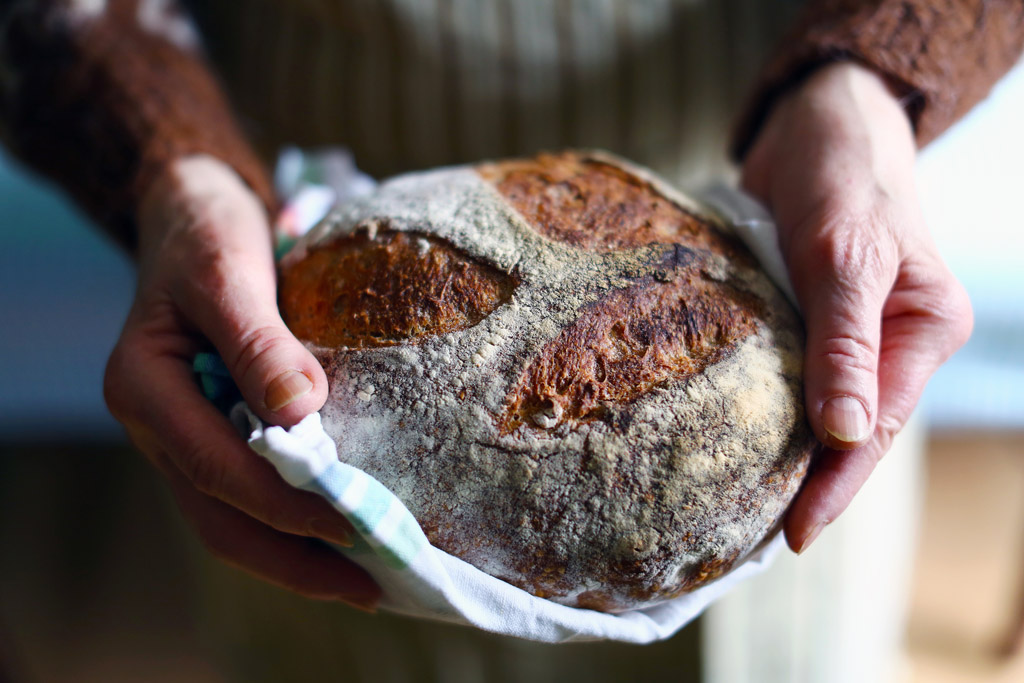
There is something deeply satisfying about pulling a golden loaf from the oven, hearing the crackle of its crust, and slicing into something you made with your own hands. No shortcuts. No preservatives. Just process.
In a world that constantly asks us to move faster, sourdough gently invites us to slow down.
If you had told me a few months ago that I would be baking sourdough bread and genuinely enjoying the process, I would have laughed. And yet, here I am.
What started as a simple gift from a friend at the yoga studio has become something much more meaningful. It has challenged me, grounded me, and expanded what I thought I was capable of.
Am I a baker now? I’m not entirely sure. But I do know this: I’m no longer intimidated by the science – and I am completely captivated by the magic.
So, if you’ve been curious, consider this your invitation. Start with the flour. Add the water. Be patient. You might just discover that somewhere in the quiet process of tending, waiting, and creating, there’s a little bit of joy – ready to rise.
And if you want a starter, message me on my socials: on FB @Cheryl Anthony Ricer or on Insta @CherRi_ontop_