


Fall is a magical time in the Lowcountry as the humidity begins to fade along with the beach crowds. Cooler days plus a plethora of freshly caught local shrimp mean that it’s the perfect time to host a backyard Lowcountry Boil (a.k.a. LCB).
Traditionally, an LCB is a large, one-pot meal consisting of seafood, sausage, potatoes, onions, and corn cooked in a savory broth that feeds a crowd. This popular form of Southern hospitality is a great way to celebrate a birthday, gather around for a pre-game tailgate, or share a Lowcountry tradition with visiting loved ones. LCB’s can be flip flop casual or an elevated dining affair … or anything in between.
What we now consider a Lowcountry Boil is rooted in Gullah-Geechee culinary culture, as it partnered a West African cooking technique with locally available ingredients. In the 1960s, Robert Gay, a commercial shrimper in Beaufort, popularized the cooking style after feeding 100 National Guardsmen with a seafood boil. The name “Frogmore Stew” came about because of Gay’s town of Frogmore on St. Helena Island. Eventually, the name morphed to become “Lowcountry Boil,” which represents a larger swath of the region where local shrimp are harvested along the Georgia and South Carolina coasts.

Locally caught shrimp are the stars of the Lowcountry Boil show.
It’s An Art
Crafting a Lowcountry Boil is more of an art than a science as it allows for so many variables. Ingredient preferences, seasoning flavors, number of guests, dining location, and the cooking apparatus are all adaptable.
LCB’s are easy to modify based on personal preferences. Have a guest who is allergic to shrimp? Consider cooking the shrimp separately so guests can still delight in the LCB and other diners can still enjoy the shrimp. Don’t like Old Bay? Select a different seasoning blend. Hate onions? Feel free to skip them. Love crab legs? Grab some from the grocery store to add in the mix or cook separately. It’s easy to tailor the meal with guest preferences in mind.
Make a mistake? That’s OK, because it’s also a very forgiving meal. Have too much water? Use a ladle to siphon some off the top. Is the cooked food not flavorful enough for guests? Add some more seasoning or hot sauce. Is it time to finally add the shrimp but the pot is too full? Remove some cooked potatoes to make room for the shrimp. Most “mistakes” are easily rectified.
Unlike most recipes, this crowd pleaser is unusual because ingredients are purchased by the pound, not the cup. When hosting an LCB, it’s important to pick quality ingredients, starting with the star of the meal. In the Lowcountry, locally caught shrimp are prized. They have a slight sweetness and plumpness, which enhances the flavor and texture of an LCB. On Hilton Head Island, locally harvested shrimp can be sourced from Barnacle Bill’s Seafood, Piggly Wiggly, and Benny Hudson’s Seafood. Across the bridge, check out Bluffton Oyster Company.
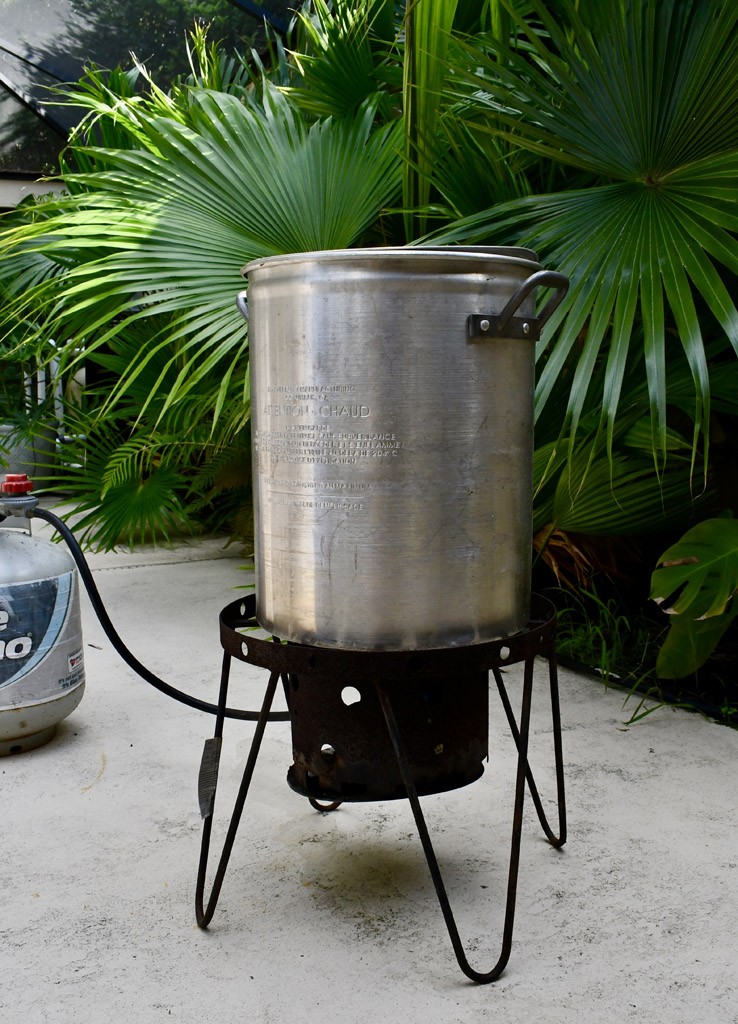
A turkey fryer is a great set up for cooking a backyard Lowcountry Boil.
It’s best to avoid uncooked sausage in an LCB, as it will disintegrate and make the boil very messy. Smoked is the best sausage option, but even with that limitation, lots of varieties exist. Kielbasa, beef, chicken, spicy, and andouille are all popular choices. Avoid using sausages with cheese, as the cheese will melt in the boil and cause a literal hot mess.
Freshly harvested white corn is preferred for its texture and sweetness in an LCB, but yellow corn can also be used. If fresh ears aren’t readily available, frozen corn on the cob (thawed) can be substituted.
Butter options are a bit controversial for LCBs. “Drawn butter” is a term used to describe melted butter for dipping crab, lobster, or other seafood before consuming. The controversial part is some diners expect drawn butter only to be melted while others expect it to be clarified. Clarified butter is melted butter with the milk fats separated out. Either way, many diners will want drawn butter poured on top of the ready-to-eat boil or served in individual cups alongside their plate.

A green salad is a popular side dish with a Lowcountry Boil. Try including a chopped salad with romaine lettuce, cheddar cheese, tomatoes, cucumbers and ranch dressing.
A green salad and warm bread are typical side dishes for an LCB. Other optional side ideas include roasted vegetables, coleslaw, potato salad, or hushpuppies.

Hosts can prep Lowcountry Boil ingredients hours in advance then refrigerate until cooking time.
Set Up the Boil Station
The most popular LCB set up is with a turkey fryer, which is a propane-fueled outdoor burner that sits on the ground with a giant pot (30 quarts) and strainer insert. Be sure to check propane tank levels before starting the fryer.
Don’t have a turkey fryer? Consider using an extra-large pot (minimum 16 quarts) or two large pots on your stovetop. Some outdoor grills also have propane burners that would work too.
If using a turkey fryer, place the cooker away from the flow of traffic and safely tucked away from children and pets. The cooking base and pot will become very hot and burns are possible. Be sure to use oven mitts and wear closed-toe shoes when near the cooker. Also, be mindful of hot water splashing out of the pot while ingredients are added.
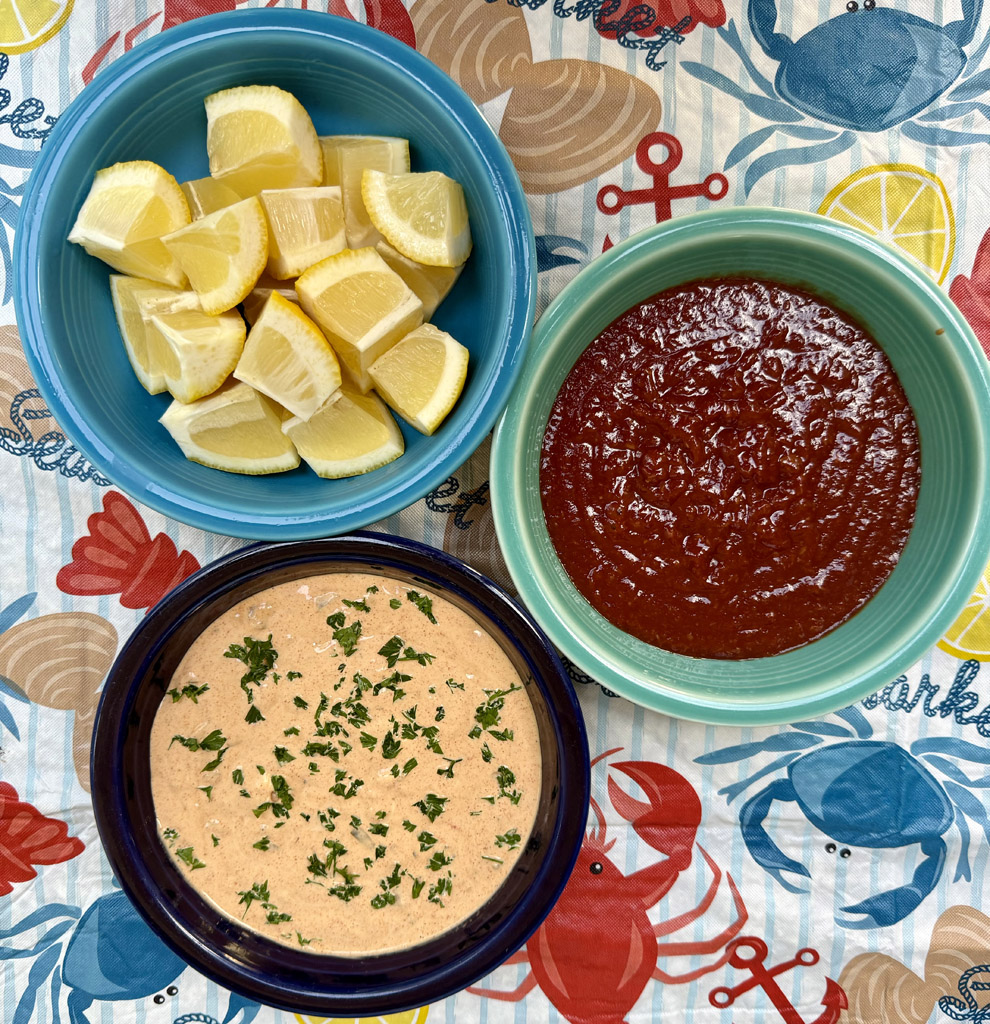
Accoutrements are the final touch for an LCB, allowing diners to customize their plates. Freshly squeezed lemon, Old Bay seasoning and, of course, drawn butter are all common options, but cocktail and remoulade sauces are also popular.
The host and occasion usually determine the serving set-up. Paper plates, spread out newspapers on the table, and a communal roll of paper towels are the easy, casual method – usually outdoors. Once the water has been drained from the pot, the boil is emptied onto the newspaper.
If a fancier event is planned, the host might choose a beautiful serving platter with tongs, alongside the good china plates, cloth napkins, and freshly cut flowers.
Cheers to a special Lowcountry gathering surrounded by loved ones this fall!

Consider using wash cloths or hand towels as napkins for this finger- lickin’ good meal.
Shrimp Remoulade Sauce
This tangy remoulade sauce packs a slight punch and is the perfect accompaniment to peel-and-eat shrimp. Wickles Pickles are found on the pickle shelves at most major grocery stores. The flavor profile is briny, with a slight sweet heat and a special blend of herbs and spices. Cornichons can be used as a substitute.
Ingredients:
1 cup mayonnaise (Duke’s preferred)
1/3 cup finely chopped Wickles Original Pickle (about 10-12 pickles)
2 tablespoons Wickles Pickle juice
1 tablespoon yellow mustard
1 tablespoon paprika (sweet or smoked)
1/2 tablespoon hot sauce (more to taste)
1 clove garlic, grated
Ground black pepper to taste
Pinch of salt to taste
1 tablespoon finely chopped parsley
Instructions:
Mix all ingredients together except parsley. Taste, then add salt and pepper and more hot sauce as desired. Stir well. Refrigerate in an airtight container for 2 to 24 hours before serving. Sprinkle with parsley at serving time.